
As the Trump administration moves to further limit support for the electric vehicle industry and roll back clean air standards, advocates are speaking out about the economic, environmental benefits
- The Trump administration’s policies, including ending EV tax rebates and rolling back clean car standards, are creating challenges for the electric vehicle industry.
- Despite political headwinds, North Carolina has seen substantial EV investment, creating jobs and ranking second in the Southeast.
- Local leaders and clean energy advocates argue that supporting EVs is crucial for economic growth and environmental protection.
With a slew of aggressive moves by the Trump administration to put the brakes on the electric vehicle industry, its been a bit of a rough road for the EV industry and clean energy advocates in recent months.
From the ending of federal tax rebates for EV buyers to clawing back Biden-era tax credits and loans for a range of clean energy projects, the renewable energy sector has been battling some pretty severe financial and political headwinds in Washington and, more recently, Raleigh.
That Republican-led onslaught could continue with the Trump-led U.S. Environmental Protection Agency looking to roll back clean car standards, meaning automakers wouldn’t have to produce a certain number of high-mileage or EV vehicles to reduce their overall greenhouse gas emissions. The transportation sector is the nation’s and North Carolina’s biggest producer of carbon emissions, the primary source of gasses that warm the atmosphere and cause climate change.
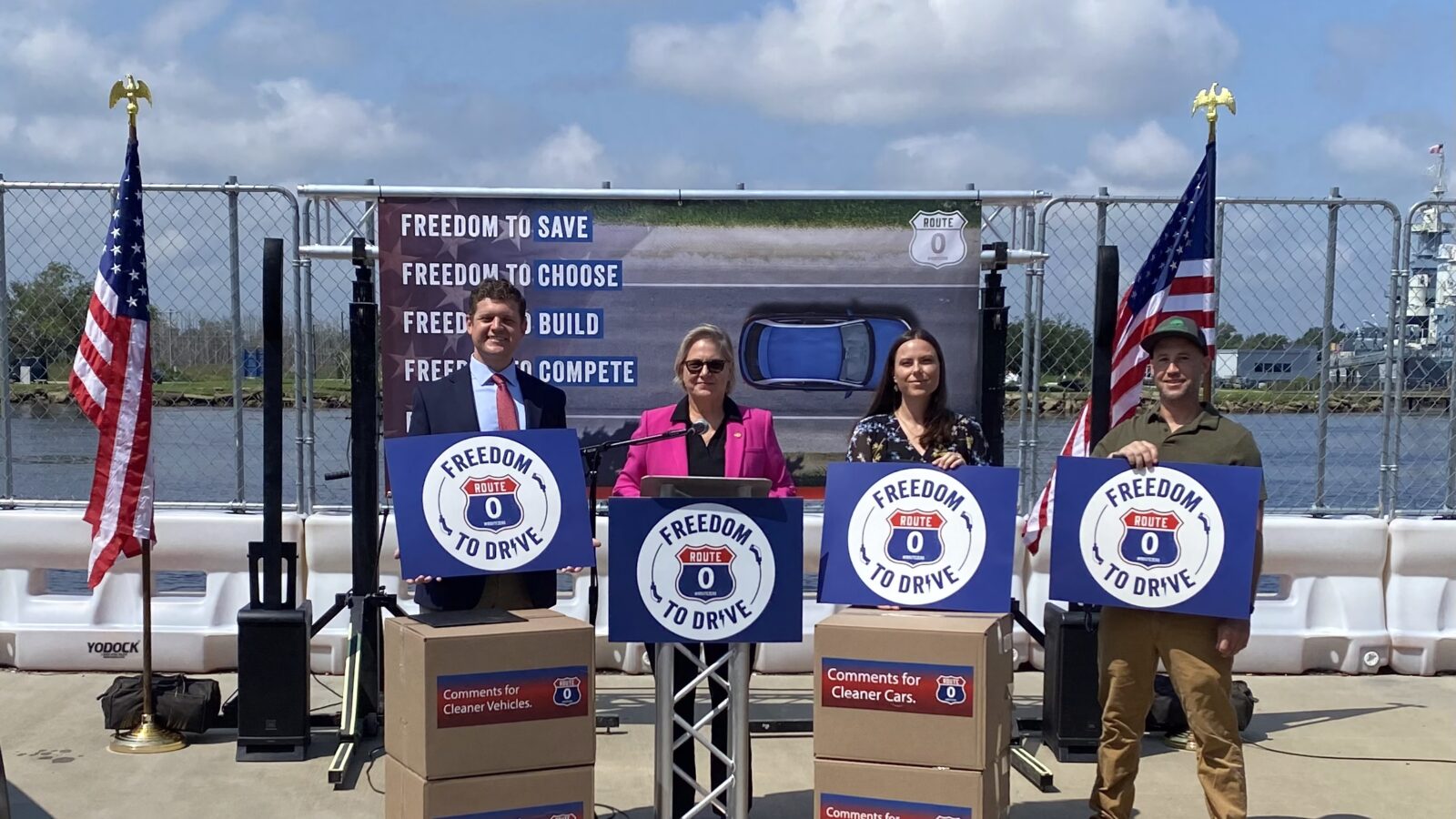
But Tuesday morning, Aug. 19, some Wilmington political leaders and clean energy supporters gathered downtown along the Cape Fear River to make a full-throated defense that moving backwards economically, politically and industrially by re-embracing old technologies isn’t in the best interest of North Carolina’s economy, the environment, or the health and quality of life of Wilmington-area residents.
The event was part of the national Freedom to Drive summer event series, which is focused on how EVs are delivering cost savings, jobs, and cleaner air to communities across the country.
“In our state, a set of keys meant freedom,” said state Rep. Deb Butler, D-Wilmington, as she spoke flanked by a Hyundai EV hatchback and Ford EV pickup.
But she said recent moves by the Trump administration to limit access to EVs and return the country’s industrial and automotive focus back to gas-powered vehicles threatens to not only cost consumers the freedom to choose what type of vehicle they want, but also the economic future for many parts of North Carolina still struggling to bounce back from the collapse of the state’s historic manufacturing industries.
Major EV investments in N.C. include Toyota’s $14 billion battery plant in Randolph County, which is forecast to start production later this year, and the $4 billion VinFast EV car plant in Chatham County, although that project has been delayed several years. India-based Epsilon Advanced Materials also is still bullish on building a $650 million, 1.5-million-square-foot EV battery manufacturing facility that could eventually employ 500 workers in Brunswick County.
According to a report by Atlas Public Policy and the Southern Alliance for Clean Energy, North Carolina has seen nearly $20.4 billion in EV investment, ranking the state No. 2 in the Southeast behind Georgia. That corresponds to an estimated 16,250 jobs, with an annual growth rate of 4%.
Butler said the moves to cut the legs out of the country’s still-developing EV industrial base doesn’t make sense, especially as the rest of the world − namely China − continues to race ahead with what they see as one of the key industries of the future.
“We can’t afford to rip up the road map,” she said. “This is a chance to rebuild the American middle class where we lost both textile and furniture jobs,” Butler said.
An industry in reverse?
But the imposition of tariffs on global trading partners and Trump’s “America First” approach to manufacturing, particularly stiff tariffs on imported cars, also has scrambled business plans and forecasts for many companies.
Still, political regimes come and go, and most companies appear to be ready to hold the course − albeit maybe ratcheting investments back a few gears − when it comes to EVs.
While the GOP-controlled N.C. General Assembly recently overrode a veto by Democratic Gov. Josh Stein to walk back some of North Carolina’s more aggressive greenhouse-gas cutting goals due to concerns over rising electricity bills and the reliability of some renewable power sources, the clean energy economic sector − including EVs − continues to grow.
According to the Atlas/Clean Energy report, there were roughly 110,000 EVs registered in North Carolina as of December 2024, with EVs accounting for about 7.2% of vehicle sales. That ranked the Tar Heel State No. 3 in the Southeast, behind Florida and just trailing Georgia, and No. 24 in the nation.
Nationally, EVs accounted for just over 10% of new vehicle sales last year.
Wilmington Councilman David Joyner, who ran on a clean energy platform, said even as Washington and Raleigh to some degree move away from clean energy initiatives, local officials and many residents continue to show their support for the environment and renewable energy options like EVs.
That includes city council last month adopting a resolution to avoid, where possible, investing city funds in businesses involved in the production or extraction of planet-warming fossil fuels and the community’s continued activism in battling for restrictions on manmade “forever chemicals,” like GenX − even in the face of industry and some political opposition.
“We must make our voices heard,” he said.
Also speaking at Tuesday’s event was David Baldwin, owner of Green Wave Electrical Contractors.
He said installing EV chargers for residents and businesses makes up a big chunk of his business. Rebates offered by Duke Energy and other local utilities mean the out-of-pocket costs are just a few hundred dollars, and that makes it the proverbial win-win for consumers and small businesses like his.
“Electric vehicles are powering small businesses like mine and fueling growth across North Carolina,” Baldwin said. “Rolling back clean car standards would stall this progress and rob our communities of opportunity.”
Reporter Gareth McGrath can be reached at GMcGrath@Gannett.com or @GarethMcGrathSN on X/Twitter. This story was produced with financial support from the Green South Foundation and the Prentice Foundation. The USA TODAY Network maintains full editorial control of the work.